

 The BMT Guarantee
 Residential case study
 Commercial case study


Is it worth getting a depreciation schedule for an old house?


First published 22 December 2025


Is it worth getting a depreciation schedule for an old house? Many investors assume that older properties, especially those built before 1987, won’t generate meaningful deductions. But in close to 30 years of completing almost 1 million depreciation schedules, BMT data has shown that age alone doesn’t determine a property’s depreciation potential. In reality, thousands of Australian investors with older rental properties continue to unlock substantial tax savings every year.
While properties built before 15 September 1987 generally don’t qualify for capital works deductions on the original structure, this rule alone only tells part of the story. Renovations, improvements and newly installed plant and equipment assets can still produce significant, ongoing claims. With BMT’s registered quantity surveyors identifying every eligible deduction, older properties often deliver far stronger depreciation outcomes than expected.
In this article we will discuss:
Why older properties can still deliver strong depreciation outcomes
Before looking at the specific legislation, it’s important to understand why older properties can still produce substantial depreciation results.
Despite common misconceptions, older properties often generate excellent depreciation results. In the last financial year, BMT Tax Depreciation found that many second-hand residential investment properties, including those built before 1987, achieved close to $5,000 in average first-year deductions.
Even if the original structure is too old to qualify for capital works deductions, improvements, renovations and newly installed plant and equipment assets can still create meaningful, ongoing tax savings for investors.
How 2017 plant and equipment legislation affects depreciation in older houses
To clarify how deductions apply to assets within older properties, the first step is understanding how the 2017 plant and equipment (division 40) changes affect second-hand properties.
Plant and equipment assets are removable or mechanical items, such as:
- ovens
- rangehoods
- dishwashers
- carpets
- blinds
- garbage bins and
- shower curtains
Since the introduction of the Treasury Laws Amendment (Housing Tax Integrity) Act 2017, confusion has persisted around what owners of second-hand properties can claim. The legislation states that owners can no longer claim depreciation on previously used plant and equipment assets if contracts for the property were exchanged after 9 May 2017 at 7:30pm. This has led some investors to mistakenly believe all plant and equipment deductions have been removed, which is not the case.

Key points
- Investors cannot claim depreciation on previously used second-hand plant and equipment if contracts were exchanged after the cut-off date.
- Investors can claim depreciation on any new plant and equipment installed after purchase.
- Investors who purchased before the cut-off date remain eligible to claim, provided the property has been continuously rented with no periods of owner-occupation.
While deductions on existing assets may be limited, newly installed items remain fully depreciable and can significantly enhance an investor’s overall claim.
Understanding 1987 capital works legislation
While plant and equipment rules can differ based on purchase date, capital works deductions (division 43) follow a different set of criteria that investors should also understand.
Capital works deductions are often the largest component of a depreciation schedule, typically accounting for 85–90 per cent of total claims. Importantly, the 2017 legislative changes did not affect capital works deductions.
Key points
- Properties built before 15 September 1987 are no longer eligible for capital works deductions on the original structure.
- Extensions, alterations or improvements to the original structure completed after 1987, whether by the current or previous owners, are fully claimable.
- Properties built after 15 September 1987 can claim capital works at 2.5 per cent per year for forty years.
- Even very old properties may contain extensive qualifying improvements.
Kitchens, bathrooms, extensions and other modifications to the original building completed after 1987 can form a substantial portion of an investor’s depreciation claim. Structural improvements that were not part of the original building, such as outdoor areas, fences, pools, pergolas and paving are only claimable if they were completed after 26 February 1992.
Substantially renovated properties
Another important category for investors to consider is properties that have been substantially renovated, as these follow their own depreciation rules.
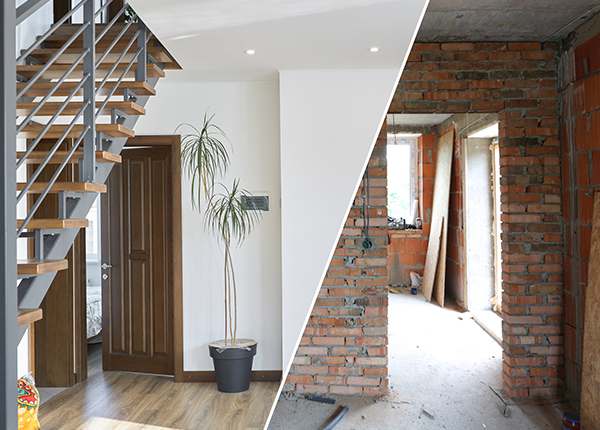
A property is considered substantially renovated when most of its original structure has been replaced. This goes beyond cosmetic updates – it refers to significant structural replacement such as flooring systems, internal walls, staircases, roofing or foundations. In these cases, the ATO classifies the property as ‘new residential premises’ for depreciation purposes, even if the original build date is decades old.
This classification is crucial because it changes how the 2017 plant and equipment legislation applies.
If a second-hand property is purchased immediately after a substantial renovation and the previous owner did not use the property after or was entitled to a deduction for the decline in value of the asset:
- The 2017 plant and equipment restrictions do not apply
- The new owner can claim all plant and equipment assets within the renovated portion
- All capital works relating to the new structure are fully deductible
This means that a property built in the 1960s but substantially renovated immediately prior to purchase, may deliver depreciation outcomes similar to a much newer build.
BMT regularly assesses substantially renovated properties and frequently identifies high-value deductions that investors are unaware of. Our inspectors are trained to recognise qualifying renovations, even when documentation from previous owners is limited, ensuring all structural upgrades and plant and equipment items are captured correctly and claimed in full.
Why a professional site inspection is essential
With so many variables influencing what can be claimed, a professional site inspection becomes critical to accurately assessing a property’s full depreciation potential.
A physical site inspection by a depreciation specialist remains the gold standard for preparing accurate and compliant depreciation schedules. It ensures:
- All eligible assets, including hidden or easily overlooked items like electrical wiring, concealed plumbing or water pipes are correctly identified and classified
- Renovations by both current and previous owners are captured accurately
- Materials, measurements and installation dates are properly documented
- Depreciation deductions are maximised while remaining fully ATO-compliant
Desktop estimates often miss key components, particularly in older homes where improvements have been added over many years and are not always visible in photographs or plans. A detailed inspection provides clarity, certainty and a complete understanding of the property’s depreciation potential.
The bottom line
When you bring all these factors together, the answer becomes clear for investors wondering whether depreciation is worthwhile for older homes.
So, is it worth getting a depreciation schedule for an old house? Absolutely.
Even when the original structure predates 1987, investors can still benefit from:
- Renovations and upgrades completed after legislative cut-off dates
- Newly installed plant and equipment
- Significant deductions on prior capital works improvements
- A depreciation schedule that is 100 per cent tax deductible
A comprehensive depreciation schedule prepared by a registered quantity surveyor such as BMT ensures every available deduction is claimed, improving cash flow and supporting the long-term performance of an investment property.
To maximise the depreciation deductions on your investment property, contact BMT Tax Depreciation on 1300 728 726 or Request a Quote
Connect with us
Stay up to date
Subscribe to receive the latest
BMT news and announcements.