

 The BMT Guarantee
 Residential case study
 Commercial case study


Landscaping depreciation: What residential property investors need to know


First published 20 January 2026


When residential property investors think about tax depreciation, the focus is usually on the building. However, landscaping depreciation can also contribute to tax deductions, provided the right components are identified and classified correctly.
Because landscaping projects often contain a mix of depreciable and non-depreciable elements and because the ATO’s boundaries are complex, professional cost segregation is essential.
Here we will explore:
- Why land is not depreciable
- Landscaping and construction expenditure explained
- Hard landscaping vs soft landscaping
- What landscaping items can be depreciated?
- What landscaping items cannot be depreciated?
- The importance of cost segregation in landscaping depreciation
- Grey areas that commonly lead to incorrect claims
- Key ATO rules investors often miss
- Landscaping depreciation in strata-managed properties
- Why a site inspection is essential
- The bottom line
Why land is not depreciable
For tax purposes, land is considered to have an unlimited effective life and does not decline in value through use. As a result, land is specifically excluded from depreciation deductions.
What can be depreciated are assets constructed on the land that have a limited effective life. These fall into two categories:
- Capital works (Division 43) - structural improvements
- Plant and equipment (Division 40) - mechanical or functional assets
Landscaping often combines all three elements, which is why it’s commonly misunderstood.
Landscaping and construction expenditure explained
Under Subsection 43-70(2) of the Income Tax Assessment Act 1997, expenditure on landscaping itself is excluded from capital works deductions.
This means the process of landscaping, including preparing or altering the land, is not deductible.
Examples of non-deductible landscaping expenditure include:
- Clearing and levelling
- Earthworks and excavation
- Soil preparation
- Removing or relocating trees
- General land shaping
- Drainage works not forming part of a depreciable structure
However, some of the above works may still qualify for depreciation if they relate directly to the construction of division 43 capital works and meet the relevant criteria.
Hard landscaping vs soft landscaping
Understanding the difference between hard and soft landscaping is critical when assessing depreciation eligibility.
Hard landscaping refers to constructed, structural or functional elements. These may qualify for depreciation.
Soft landscaping refers to natural elements such as plants and soil. These are not depreciable.
This distinction underpins most ATO decisions relating to landscaping depreciation.
What landscaping items can be depreciated?
The following landscaping components may qualify for depreciation, depending on their nature and use:
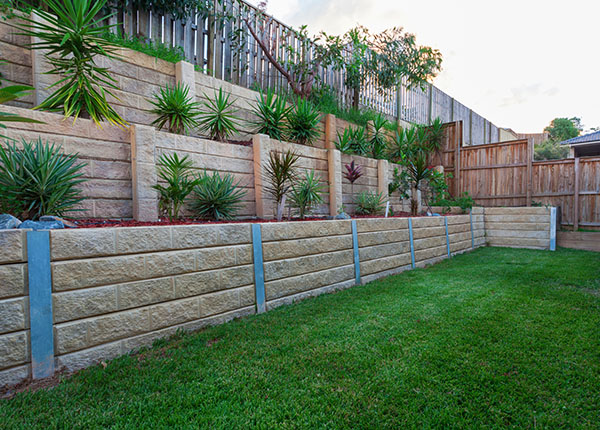
- Structural retaining walls
- Concrete paths and driveways
- Pools and permanent surrounds
- Structural pergolas and decks
- Fencing
- Irrigation pumps and controllers
- Garden and exterior lighting
- Pool equipment and motors
Structural items are typically claimed as capital works at 2.5 per cent per year, while easily removable or mechanical assets are depreciated as plant and equipment over their effective life.
What landscaping items cannot be depreciated?
The following items are not depreciable under any division:
- Plants, trees and shrubs
- Turf and grass
- Soil, mulch and garden beds
- Gravel and loose stones
While these elements may improve a property’s appeal, they are treated as part of the land for tax purposes.
The importance of cost segregation in landscaping depreciation
Landscaping works are rarely itemised clearly in construction or renovation documents. Without proper cost segregation, investors often underclaim or misclassify deductions.
A quantity surveyor can:
- Separate depreciable assets from non-depreciable land costs
- Allocate costs accurately between divisions
- Apply correct depreciation rates and effective lives
- Ensure claims align with ATO legislation
This process is critical for both maximising deductions and maintaining compliance.
Grey areas that commonly lead to incorrect claims
Certain landscaping elements regularly cause confusion, including:
- Distinguishing retaining walls from earthworks
- Pool areas containing both depreciable and non-depreciable components
- Decks integrated with landscaping
- Mixed projects combining structural works and land preparation
For example, while a pool and equipment may be depreciable, surrounding turf and vegetation works are not. Pool areas are one of the most common areas of misclassification.
Key ATO rules investors often miss
Several ATO rules frequently affect landscaping claims:
- Depreciation can apply even if the current owner did not pay for the work
- Structural improvements constructed after 26 February 1992 may still be eligible
- Older properties can still qualify due to later upgrades
- Missing invoices do not prevent a claim because costs can be reasonably estimated by a quantity surveyor
These rules often result in missed deductions when landscaping is not assessed properly.
Landscaping depreciation in strata-managed properties
In strata properties, landscaping is often classified as common property.
Eligible depreciation may apply to:
- Shared driveways and pathways
- Pool and outdoor common areas
- Retaining walls and boundary structures
Deductions are apportioned based on unit entitlement and because costs are rarely itemised, landscaping depreciation in strata properties is frequently overlooked.
Why a site inspection is essential
Landscaping depreciation cannot be reliably assessed from plans or invoices alone.
A site inspection by a specialist quantity surveyor allows for:
- Accurate identification of depreciable components
- Correct separation of land and construction costs
- Discovery of assets not visible in documentation
- Reduced ATO risk and maximised deductions
- Identification of newly added works
A site inspection remains the most reliable way to ensure landscaping depreciation is claimed correctly and in full.
The bottom line
Landscaping can do more than boost street appeal, it can boost your tax deductions too. While plants and turf aren’t claimable, many hard landscaping features are. Because these are often bundled into one project, deductions are easy to miss. A professional depreciation schedule ensures you claim what you’re entitled to, stay compliant and get the most value from your investment. To maximise the depreciation deductions on the landscaping for your investment property, call BMT Tax Depreciation on 1300 728 726 or Request a Quote.
Connect with us
Stay up to date
Subscribe to receive the latest
BMT news and announcements.