

 The BMT Guarantee
 Residential case study

 Commercial case study



From boom gates to BBQs: the overlooked depreciable assets in caravan parks


First published 26 October 2026


Caravan parks can contain hundreds, and sometimes thousands, of depreciable assets. With so many assets to account for, even highly visible items can be overlooked when depreciation deductions are identified and calculated.
From the boom gate at the entrance to cabin furniture, communal BBQs, playground equipment and essential infrastructure, caravan park depreciation can extend across almost every part of the property. Correctly identifying and classifying these assets can help ensure eligible assets receive the appropriate depreciation treatment.
Not every asset is treated the same way. Some may qualify as plant and equipment under Division 40, while buildings, structural improvements and permanently fixed items may qualify for capital works deductions under Division 43. A detailed assessment is essential to capture the full range of eligible deductions without misclassifying assets.
A walk through a typical caravan park shows how much can be hiding in plain sight.
- Start at the entrance, then move through to reception
- Cabins can contain deductions from floor to ceiling
- Amenities blocks contain more than plumbing
- Recreation areas can be rich in assets
- Do not overlook the infrastructure
- Why caravan parks require a detailed depreciation assessment
- A site inspection can uncover what records miss
- The bottom line
Start at the entrance, then move through to reception
Depreciable assets can begin before a guest has entered the park.
An entrance may contain electronic boom gates, access control equipment, intercoms, security cameras and other systems used to manage vehicles and visitors. Depending on their function and installation, eligible assets may be depreciated separately as plant and equipment.
The physical improvements surrounding the entrance also matter. Roads, paths, retaining structures, fencing and other qualifying construction can form part of the property's capital works.
The same distinction continues through to reception. The reception building itself may provide capital works deductions, including qualifying structural elements and permanently fixed improvements.
Inside, the reception area can contain a different mix of plant and equipment. Depending on ownership and eligibility, depreciable plant and equipment could include:
- Computers and office equipment
- Furniture
- Air conditioning equipment
- Security and access systems
- Appliances
- Point-of-sale equipment.
A reception area that includes a shop, café or commercial kitchen can add another layer of depreciable assets.
The image below shows examples of first-year depreciation deductions identified in a caravan park reception area.
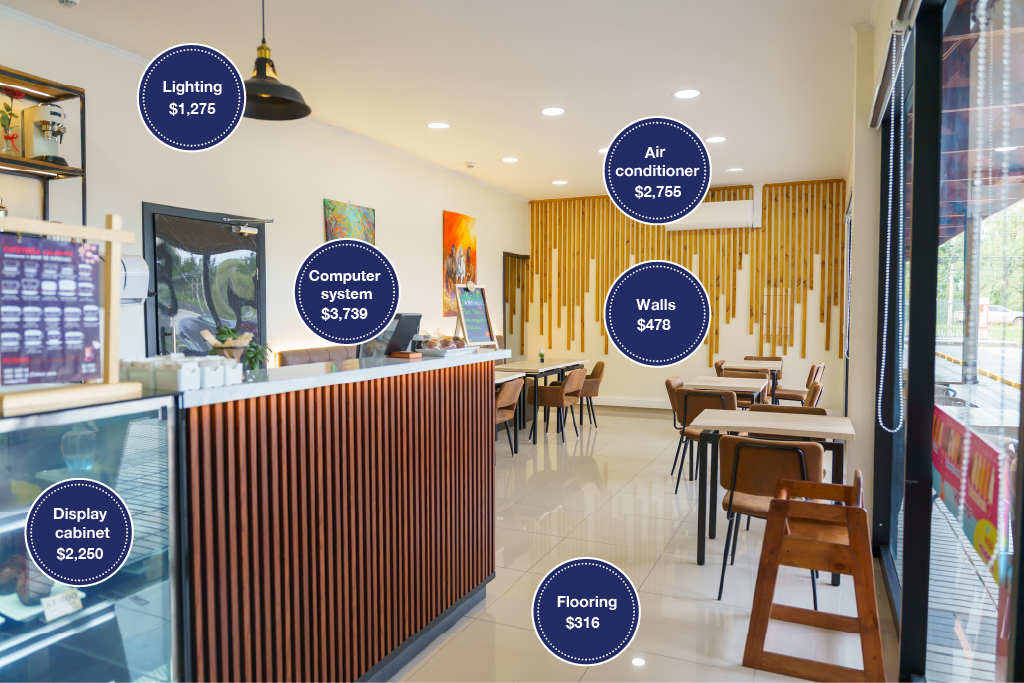
This is where detailed asset identification becomes important, as two assets located metres apart can have different depreciation treatments. If the entrance, reception building or fit-out is grouped as a single construction cost, eligible assets can be missed or incorrectly classified.
Cabins can contain deductions from floor to ceiling
Cabins are one of the most asset-rich areas of a caravan park.
The cabin structure and qualifying fixed elements may attract capital works deductions. Inside the cabin, eligible plant and equipment can include items with shorter effective lives that depreciate sooner.
Common examples can include:
- Beds and other furniture
- Refrigerators
- Microwaves
- Televisions
- Air conditioners
- Window coverings
- Certain floor coverings
- Kitchen appliances
- Hot water systems.
The image below shows examples of first-year depreciation deductions across common cabin assets.
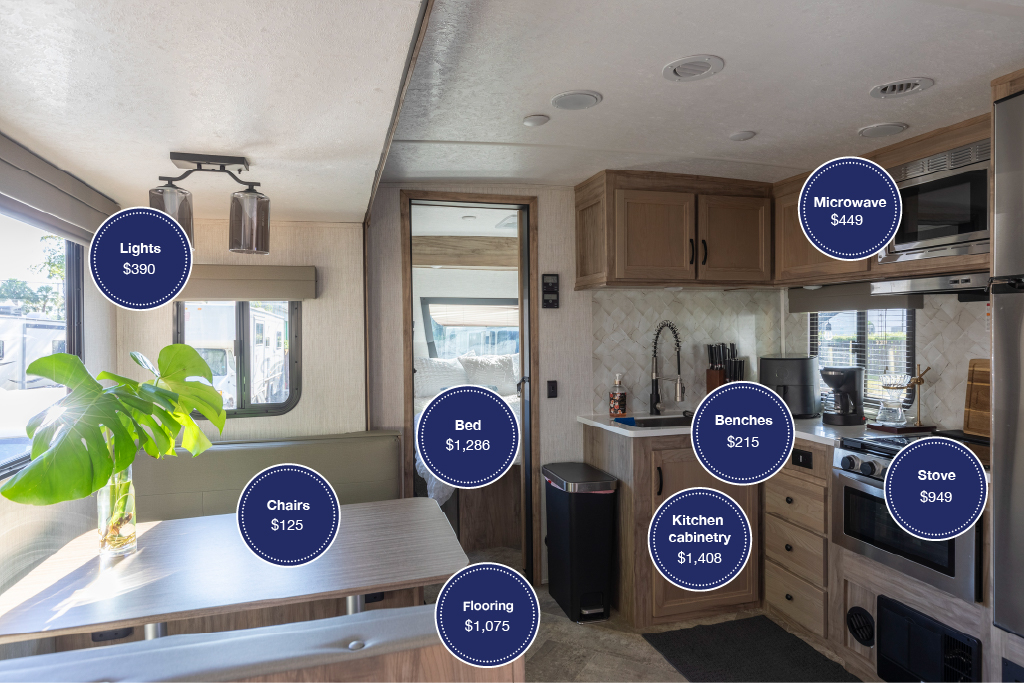
When similar assets are installed across multiple cabins, overlooking even one asset type can affect the completeness of the depreciation assessment.
The same principle applies when cabins are refurbished. Replacing furniture, appliances or other assets can create new depreciation entitlements, while the remaining depreciable value of a removed asset may be claimed as an immediate deduction if the relevant requirements are met. Failing to identify outgoing assets before work begins can mean this opportunity is missed.
Amenities blocks contain more than plumbing
Communal bathrooms, laundries and camp kitchens are another area where valuable deductions can be overlooked.
An amenities block may appear to be largely structural, but it can contain a mixture of capital works and plant and equipment.
Eligible assets could include washing machines, dryers, hot water equipment and other removable or mechanical items. Meanwhile, the building structure, walls, doors, fixed cabinetry and other qualifying permanent improvements may form part of the capital works claim.
The image below shows examples of first-year depreciation deductions identified in a communal laundry room.
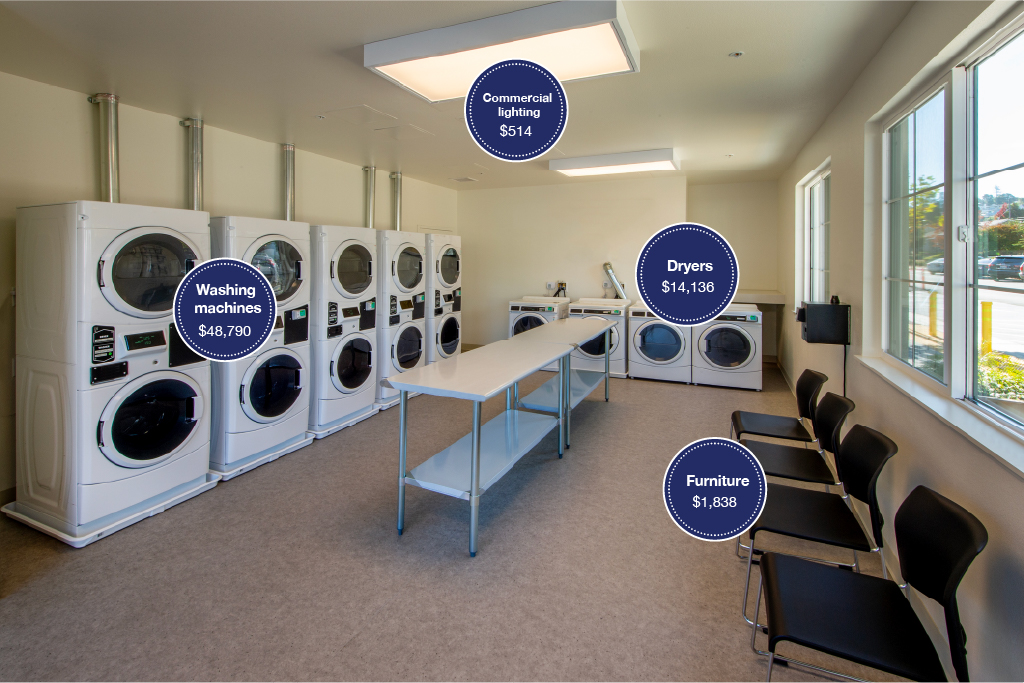
Commercial-style camp kitchens can broaden the asset base further. Depending on the facilities provided, there may be cooking appliances, refrigerators, furniture and other equipment to identify.
Assessing the amenities block beyond its structural elements helps identify plant and equipment that might otherwise be absorbed into the broader building cost.
Recreation areas can be rich in assets
Recreation areas can introduce another layer of depreciable assets across the property.
Modern caravan parks can provide extensive recreation facilities, from swimming pools and playgrounds to games rooms and communal entertaining areas.
Take the humble park BBQ. It may be one small item within a large property, but it is exactly the type of asset that can disappear within broader construction or landscaping costs if assets are not assessed individually.
Other recreation assets can include eligible:
- Outdoor furniture
- Playground equipment
- Gym equipment
- Games and recreational equipment
- Pool equipment
- Shade structures
- BBQs and associated equipment.
The image below shows examples of first-year depreciation deductions identified in an outdoor recreation area.
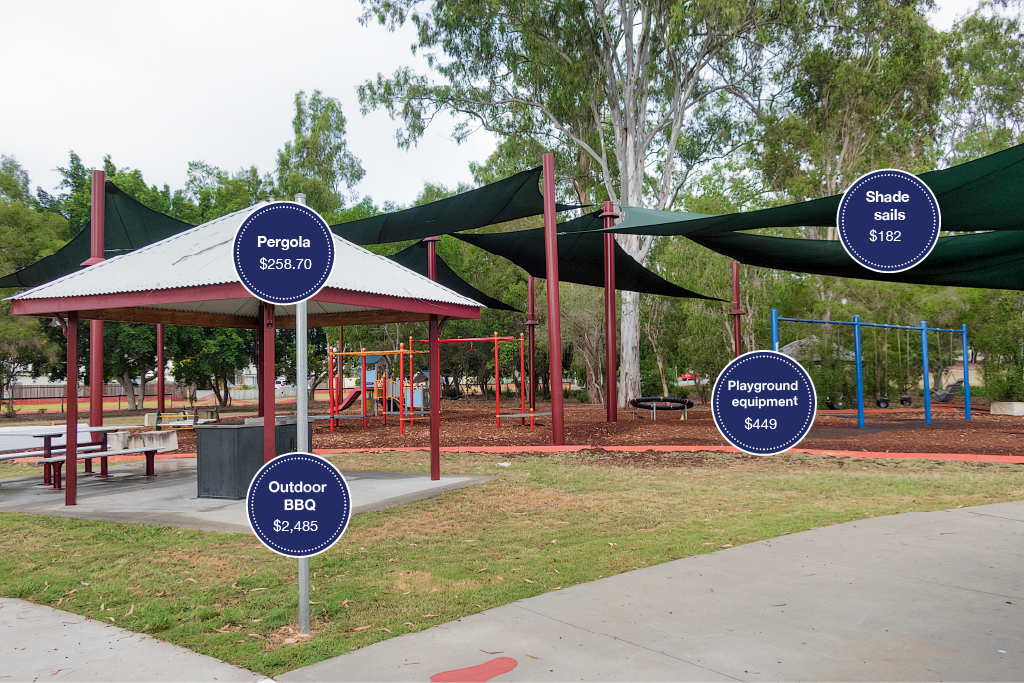
Swimming pool areas are a good example of why correct classification matters. A pool facility can include qualifying structural works as well as separately identifiable plant and equipment.
The greater the number and variety of facilities a park provides, the more important a detailed asset-by-asset assessment becomes.
Do not overlook the infrastructure
Some of the most important assets in a caravan park are the ones guests rarely notice.
Caravan parks rely on extensive infrastructure to keep accommodation, amenities and communal facilities operating. Depending on the property, this can include electrical, water, wastewater, drainage, communications and other services.
There may also be pumps, tanks, mechanical equipment and other assets supporting those systems.
The image below shows examples of first-year depreciation deductions identified across caravan park infrastructure.
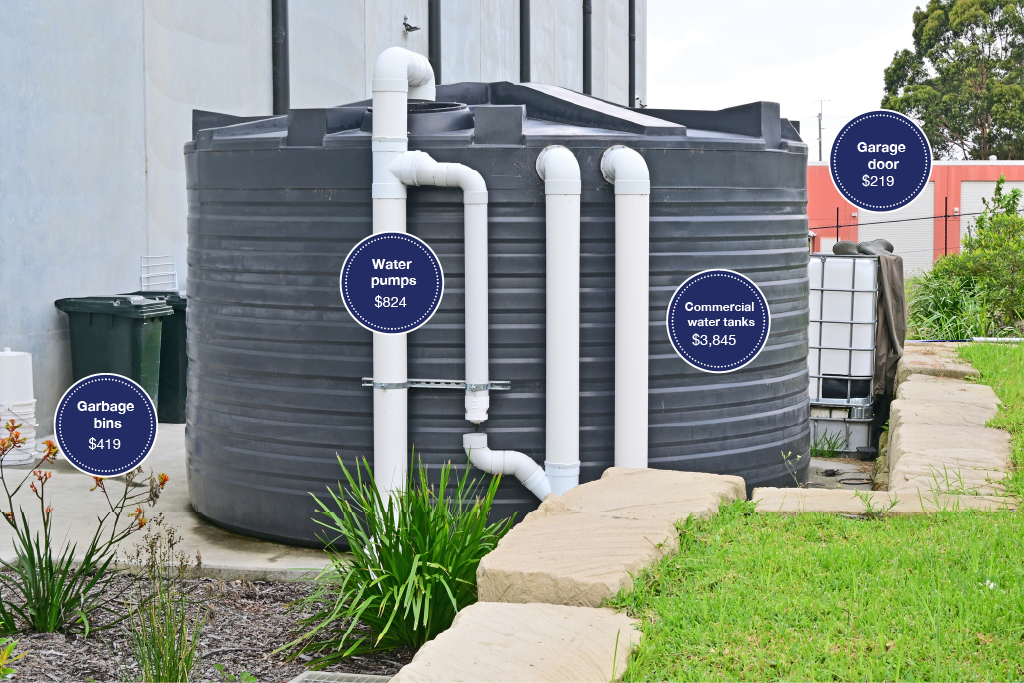
Infrastructure can be particularly difficult to assess because individual components may be spread across a large site, partly concealed or incorporated into broader construction works. Their tax treatment can also depend on their function, installation and the circumstances of the property.
This is one reason relying only on a construction invoice or asset register can leave gaps. A specialist quantity surveyor can inspect the site, identify eligible assets and establish construction costs where records are incomplete.
Why caravan parks require a detailed depreciation assessment
Caravan parks can combine accommodation, retail, hospitality, recreation, office facilities, landscaping and substantial infrastructure within a single property. Each area can contain assets with different effective lives and depreciation treatments.
Common errors can include:
- Bundling separately depreciable assets into building costs
- Misclassifying plant and equipment as capital works, or vice versa
- Applying an incorrect effective life
- Missing smaller ancillary assets
- Failing to identify eligible assets removed during renovations
- Relying on incomplete historical construction records.
These errors can reduce legitimate deductions or lead to claims that do not reflect the correct tax treatment.
For an asset-intensive property such as a caravan park, a detailed assessment can help identify eligible assets, apply the appropriate depreciation treatment and reduce the risk of omissions or misclassification.
A site inspection can uncover what records miss
Caravan parks are not properties that should be assessed from a desk alone.
Plans, invoices and fixed asset registers can provide valuable information, but they may not capture every asset currently installed at the property. Older parks may also have undergone years of extensions, cabin replacements, amenities upgrades and infrastructure works with incomplete cost records.
A physical site inspection allows a specialist quantity surveyor, such as BMT Tax Depreciation, to assess the property as it exists, identify assets throughout the park and determine the appropriate depreciation treatment.
This can be particularly valuable when assets are repeated across the site. A single overlooked air conditioner, appliance or item of outdoor equipment may appear minor, but overlooking the same asset across dozens of cabins or facilities can materially affect the overall depreciation claim.
Accuracy matters just as much as maximising deductions. BMT Tax Depreciation prepares tax depreciation schedules by identifying eligible assets, estimating qualifying construction costs where necessary and applying the appropriate depreciation treatment.
The bottom line
From the moment a guest passes through the boom gate to the time dinner goes on the communal BBQ, a caravan park can contain depreciable assets at almost every turn.
The opportunity extends well beyond cabins. Reception areas, amenities blocks, recreation facilities and the infrastructure supporting the entire park can all contain eligible plant and equipment or capital works.
For owners, the risk is assuming the obvious assets are the only ones that matter. Smaller, ancillary and less visible assets can contribute to the overall depreciation available for the property.
A comprehensive tax depreciation schedule prepared by a specialist quantity surveyor, such as BMT Tax Depreciation, helps ensure eligible assets are identified, correctly classified and claimed in accordance with Australian tax legislation. For an asset-intensive property such as a caravan park, a thorough site inspection is an important step in making sure valuable deductions are not left behind.
To understand the depreciation available for your caravan park, contact BMT Tax Depreciation on 1300 728 726 or Request a Quote online.
Connect with us
Stay up to date
Subscribe to receive the latest
BMT news and announcements.