 The BMT Guarantee
 Residential case study
 Commercial case study


Newsletter
The intersection of fitness industry growth and property depreciation benefits
The health and fitness industry in Australia is big business. In 2023, there were approximately 7,300 health and fitness centres located across Australia and according to research reported by CommBank IQ, Australians spent up to $3.5 billion on fitness clubs and gyms in that same year. In the 2023 financial year, close to 50 per cent of Australians aged between 18 and 24 used health and fitness facilities, with the 25 to 35 age group showing similarly high participation at around 48 per cent.
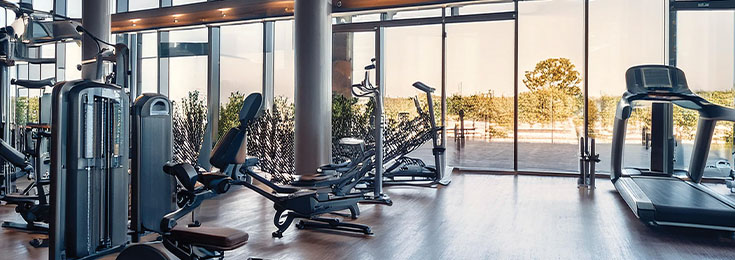
Despite having a relatively small population of just over 26 million, Australia once again demonstrated its status as a proud sporting nation during the 2024 Summer Olympic and Paralympic Games. With the Brisbane 2032 Olympics inching closer, the health and fitness industry is bound to go from strength to strength, with a focus on growing our sporting prowess that we at BMT, fully support.
Over the years, BMT has completed tax depreciation schedules for fitness centres ranging from home gyms rented by startup trainers to national fitness franchises operating from large-scale facilities. Irrespective of the size or ownership structure of these facilities, they hold excellent depreciation deductions for both Division 40 plant and equipment and Division 43 capital works deductions.
In Australia, fitness equipment, including weights, treadmills, stationary bicycles, rowing machines and other industry specific apparatuses can qualify for Division 40 plant and equipment depreciation (TR 2022/1). The rate of depreciation is determined by the ATO and calculated over the effective life of each asset.
Division 43 capital works can also be claimed on the wear and tear of the building structure and fixed assets at varied rates depending on the industry and the date construction commenced.
Following we have two case studies of fitness centres that have claimed depreciation with BMT.
Case study 1: A pilates studio
In 2024 a pilates franchise signed a new lease on a 150sqm space and requested a depreciation schedule on the fit-out. This small business entity installed loose assets including multiple reformer beds, free weights and furnishings.
The business could claim $142,390 in Division 40 plant and equipment depreciation deductions for the first full financial year, matching the total setup cost of the studio.
The Instant Asset Write-Off, to be extended to June 2025, allows small business entities with an aggregated turnover under $10 million to immediately deduct the full cost of assets costing less than $20,000. This applies to assets that are first used or installed ready for use between 1 July 2023 and 30 June 2025.
Table 1: Pilates studio depreciation scenario
| Plant and equipment | Total cost | First year deductions |
| CCTV systems - Cameras | $1,998 | $1,998 |
| CCTV systems - Monitors | $152 | $152 |
| Ceiling fans | $896 | $896 |
| Free weight training assets - Barbells, dumbbells, kettle bells, weight plates and storage racks | $6,859 | $6,859 |
| Furniture - General | $2,446 | $2,446 |
| Health and fitness centre operation assets - Resistance training machines* | $112,995 | $112,995 |
| Kitchen assets - Water filters, electrical | $1,512 | $1,512 |
| Light fittings and shades | $8,955 | $8,955 |
| Readers - Proximity | $616 | $616 |
| Recorders - Digital | $764 | $764 |
| Signage | $2,547 | $2,547 |
| Support assets - Audio visual entertainment assets | $2,650 | $2,650 |
| Total plant and equipment | $142,390 | $142,390 |
*Assets individually under $20,000.
Case study 2: A national fitness franchise
A popular national fitness franchise requested a depreciation schedule following a new fit-out on an existing 500sqm facility with traditional gym equipment, including a free weights section, cardio section, resistance training equipment, studio space and multiple change rooms.
This fit-out offered both Division 40 plant and equipment, as well as Division 43 capital works deductions. As a small business entity, temporary full expensing was applied to the plant and equipment, matching the total spend on plant and equipment in first-year deductions.
Table 2: National fitness franchise depreciation scenario
| Plant and equipment | Total cost | First year deductions |
| Access control systems - Door controllers | $3,270 | $3,270 |
| Bathroom accessories | $2,905 | $2,905 |
| Cardiovascular training machines - Cross trainers, steppers and treadmills* | $141,030 | $141,030 |
| Cardiovascular training machines - Exercise bicycles | $33,470 | $33,470 |
| Cardiovascular training machines - Rowing machines* | $27,636 | $27,636 |
| Carpet | $14,231 | $14,231 |
| CCTV systems - Cameras | $12,701 | $12,701 |
| CCTV systems - Monitors | $795 | $795 |
| Door closers | $490 | $490 |
| Floor coverings - Linoleum and vinyl | $9,750 | $9,750 |
| Free weight training assets - Barbells, dumbbells, kettle bells, weight plates, storage racks | $25,634 | $25,634 |
| Free weight training assets - Benches | $11,273 | $11,273 |
| Health and fitness centre operation assets - Resistance training machines* | $138,597 | $138,597 |
| Hot water installations | $1,824 | $1,824 |
| Kitchen assets - Water filters, electrical | $1,850 | $1,850 |
| Light fittings and shades | $2,522 | $2,522 |
| Partitions | $4,986 | $4,986 |
| Readers - Proximity | $859 | $859 |
| Security system | $2,352 | $2,352 |
| Signage | $6,683 | $6,683 |
| Support assets - Audio visual entertainment assets | $3,110 | $3,110 |
| Total plant and equipment | $445,968 | $445,968 |
| Capital works | $245,837 | $6,146 |
| Total depreciation | $691,805 | $452,114 |
*Assets individually under $20,000.
At BMT Tax Depreciation we insist on a site inspection to ensure full ATO compliance in case of a tax audit and to ensure that you don't miss out on any depreciation deductions. Both these fitness franchises were able to maximise their deductions, increasing their cash flow.
For more information on how to maximise the depreciation deductions on a fitness centre, contact BMT Tax Depreciation on 1300 728 726 or request a quote.