

 The BMT Guarantee
 Residential case study
 Commercial case study


Understanding depreciation on medical equipment in healthcare facilities


First published 28 January 2026


Medical practices and healthcare facilities rely on high-value equipment to operate effectively. Yet depreciation on medical equipment is frequently misunderstood, misapplied, or underclaimed, leaving significant tax deductions unrealised. For owners of medical centres, day surgeries and allied health facilities, this is not a minor oversight. Medical equipment is often one of the largest depreciating components within a healthcare property, and incorrect treatment can materially affect cash flow and long-term tax outcomes.
This article explains how depreciation on medical equipment works under Australian tax law, how the depreciation rate for medical equipment is determined, and why specialist assessment is essential for accuracy and compliance.
- What is medical equipment depreciation?
- What qualifies as medical equipment for depreciation purposes?
- Division 40 vs Division 43: why the distinction matters
- How is the depreciation rate for medical equipment determined?
- Who can claim depreciation on medical equipment?
- Why specialist assessment is essential
- Common mistakes with medical equipment depreciation
- The bottom line
What is medical equipment depreciation?
Medical equipment depreciation refers to the tax deduction available for the decline in value of eligible equipment used in an income-producing medical or healthcare setting. As equipment ages and wears through use, the Australian Taxation Office (ATO) allows owners to claim this loss in value over time as a deduction.
In medical properties, depreciation commonly applies to high-cost, specialised assets that are integral to the delivery of healthcare services. These deductions are claimed under Division 40 – plant and equipment, which covers assets that are not part of the building’s permanent structure.
What qualifies as medical equipment for depreciation purposes?
Medical equipment typically includes assets that are removable, mechanical or operational in nature. Common examples include:
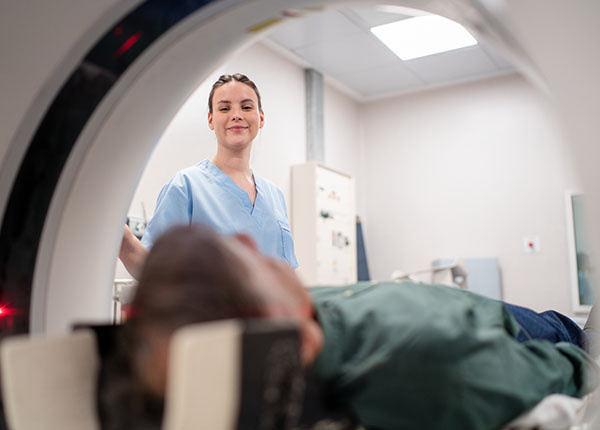
- Diagnostic imaging equipment such as X-ray, ultrasound and CT machines
- Dental chairs, imaging units and sterilisation equipment
- Medical lasers and treatment devices
- Pathology and laboratory equipment
- Autoclaves and sterilisation units
- Practice-specific fit-out equipment used for treatment or diagnosis
Each item must be assessed individually to determine whether it qualifies as plant and equipment and whether it is eligible for depreciation.
Importantly, medical equipment should not be confused with building elements or fixed structural items. Misclassifying assets can result in incorrect depreciation claims and compliance risk.
Division 40 vs Division 43: why the distinction matters
Medical facilities often contain a mix of depreciable assets across two categories:
Division 40 – Plant and equipment
This includes medical equipment and other removable or mechanical assets. These items are depreciated over their effective life, with the depreciation rate for medical equipment varying depending on the asset type and its expected useful life.
Division 43 – Capital works
This applies to the building structure and permanently fixed elements, such as walls, floors, ceilings and structural fit-outs. Capital works are generally claimed at 2.5 per cent per year over forty years, where eligibility criteria are met.
Correctly separating medical equipment (Division 40) from capital works (Division 43) is critical. Errors in this area are common, particularly where specialised fit-outs blur the line between structure and equipment.
How is the depreciation rate for medical equipment determined?
There is no single depreciation rate for medical equipment. The applicable rate depends on the asset’s effective life, which may be:
- Set by the ATO through published effective life determinations, or
- Self-assessed where the equipment is highly specialised and not specifically listed
For example, diagnostic imaging equipment will generally have a different effective life to dental equipment or laboratory machinery. Once the effective life is established, depreciation can be calculated using either the diminishing value method or the prime cost method, subject to tax strategy and eligibility.
Applying an incorrect effective life or method can significantly understate or overstate deductions, exposing owners to audit risk.
Who can claim depreciation on medical equipment?
Depreciation on medical equipment can generally be claimed by:
- Owners of medical centres and healthcare facilities
- Investors who own medical or healthcare properties leased to operators
- Certain business owners who hold equipment directly and use it to produce assessable income
Eligibility depends on ownership, use, and whether the equipment is installed in an income-producing context. Lease structures, fit-out arrangements and tenant incentives can all affect who is entitled to claim the depreciation.
This is a common area of confusion and requires careful review.
Why specialist assessment is essential
Medical equipment is not standard commercial plant. It is specialised, high-value and often custom-installed. As a result, accurate depreciation requires:
- Detailed site inspections
- Correct asset identification and classification
- Knowledge of ATO effective life guidance and self-assessment rules
- Experience with medical and healthcare fit-outs
Specialist quantity surveyors are recognised by the ATO as appropriately qualified to assess construction costs and depreciable assets for tax purposes. This is particularly important where original cost information is unavailable or incomplete, which is common in medical properties.
Common mistakes with medical equipment depreciation
Medical equipment depreciation is one of the most technically complex areas of property-related tax depreciation. Frequent errors include:
- Misclassifying equipment as capital works
- Applying generic depreciation rates that do not reflect actual effective lives
- Overlooking bundled or integrated equipment within fit-outs
- Failing to identify scrapping opportunities when equipment is replaced or upgraded
- Relying on estimates without a detailed site inspection
These mistakes often result in conservative claims that fall well short of what is legally available.
The bottom line
Depreciation on medical equipment represents a substantial and often underutilised tax deduction for medical property owners and investors. There is no standard depreciation rate for medical equipment, and applying generic assumptions can lead to missed deductions or compliance risk. Medical facilities require careful, asset-by-asset assessment to ensure equipment is correctly classified, valued and depreciated in line with Australian tax law.
For medical property owners and investors, this is not an area for assumptions. A professionally prepared tax depreciation schedule is not optional — it is essential to ensure high-value medical equipment is accurately assessed, fully compliant and audit-ready. Contact BMT Tax Depreciation on 1300 728 726 or Request a Quote online to understand how medical equipment depreciation can strengthen cash flow without compromising compliance.
Connect with us
Stay up to date
Subscribe to receive the latest
BMT news and announcements.